Small-Sided Soccer: Why America Needs More Small Fields
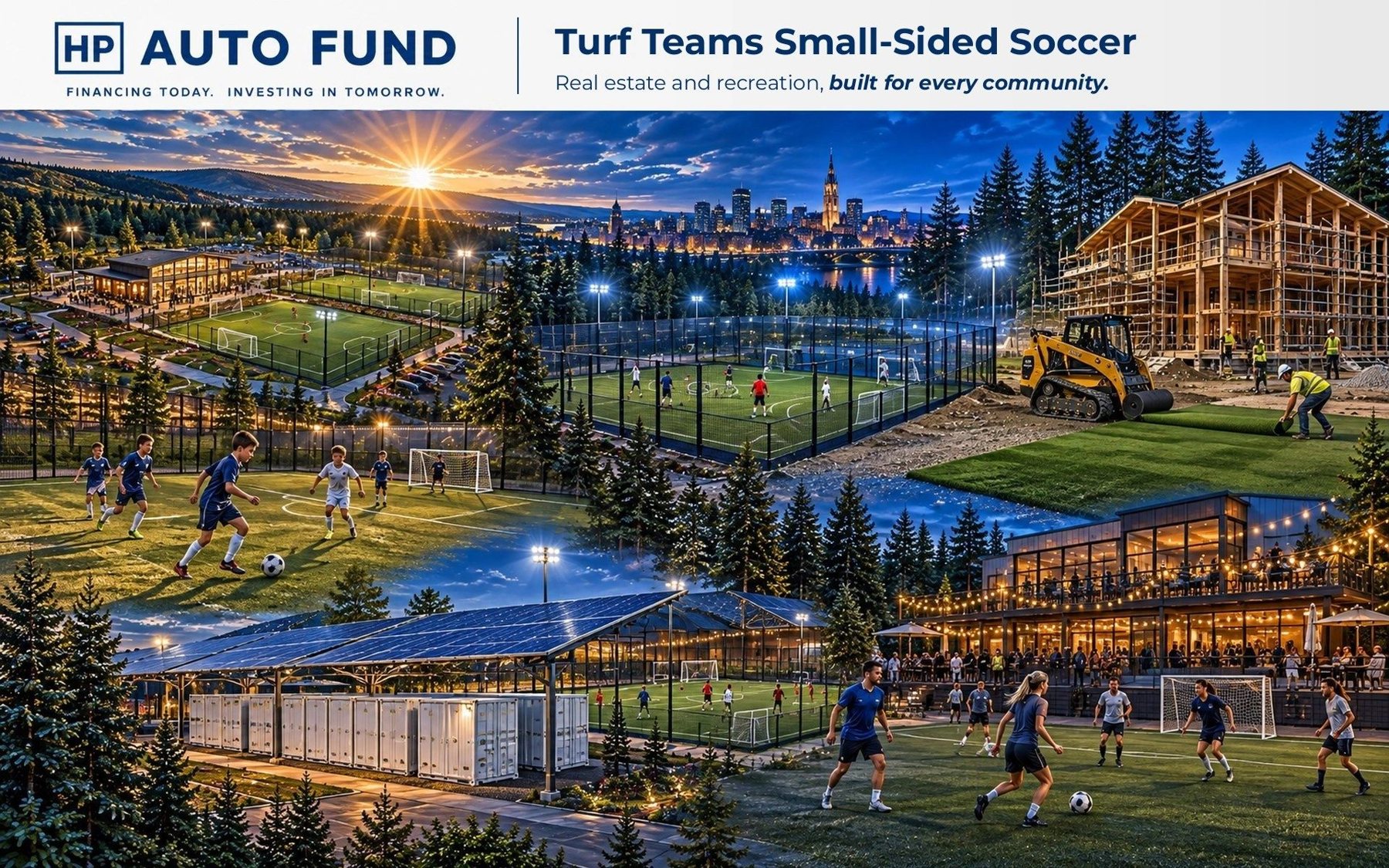
Virginia Beach, VA - Across much of the world, small-sided soccer is the everyday version of the game, yet the United States has relatively few fields built for it. Turf Teams, an investment of HP Auto Fund LLC, was formed to help change that.
By Mike Field, President, HP Auto Fund LLC
Outdoor soccer in the United States reached 16.8 million participants in 2025, a 15.8% jump from 2024 and an all-time high, according to the Sports & Fitness Industry Association. Indoor soccer reached 6.6 million, also a record. In my view, many of those players do not need a full-size field. They need a small one, close to home, with lights.
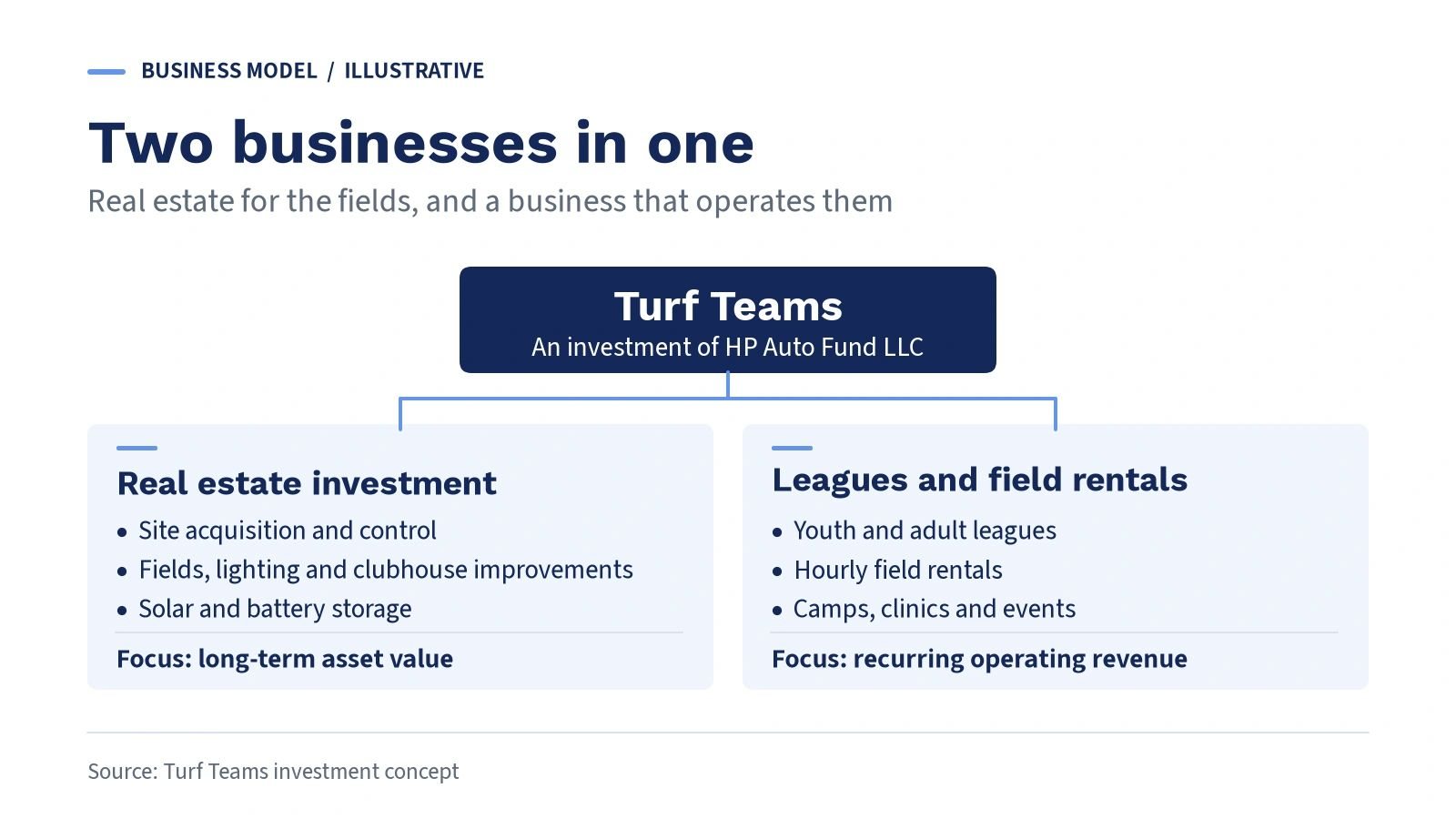
Turf Teams is designed as two businesses, and this article covers both. One is a real estate investment in the land and the fields. The other is an operating business that will run local leagues and rent fields by the hour.
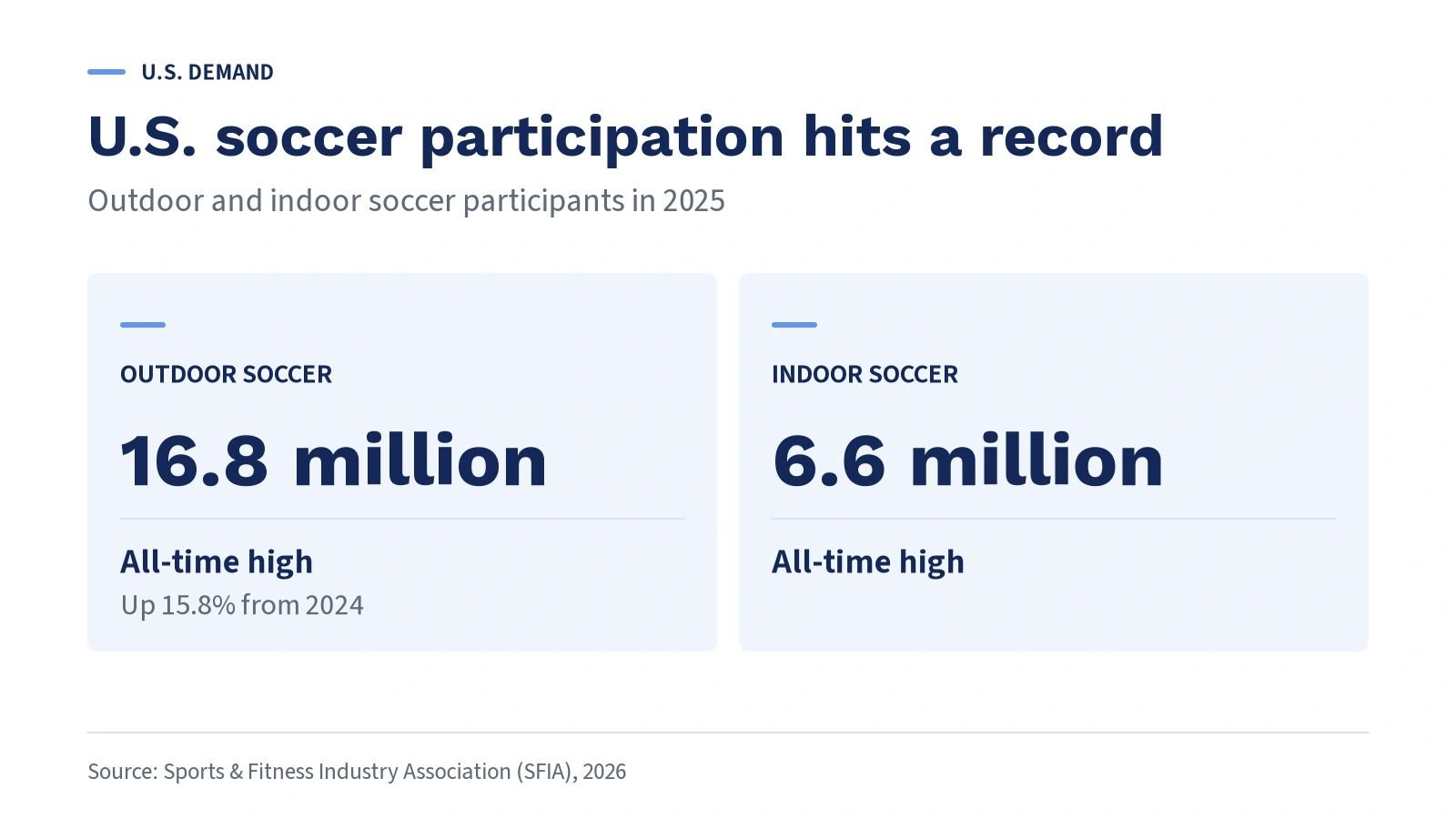
Source: Sports & Fitness Industry Association, 2026
What owning a club taught me
I have been around the business of soccer for more than twenty years. I owned the Virginia Beach Mariners of the A-League. In the early 2000s, I was in contention to acquire D.C. United of Major League Soccer. Today, through HP Auto Fund, I am a very small minority investor in Sheffield United Football Club in England.
Those years taught me two things. Professional clubs get the headlines, but the game grows on small fields where people play every week. And in England, I saw that small fields can be a business of their own, with national operators, evening leagues and repeat bookings. In the United States, that business is still young.
What small-sided soccer is
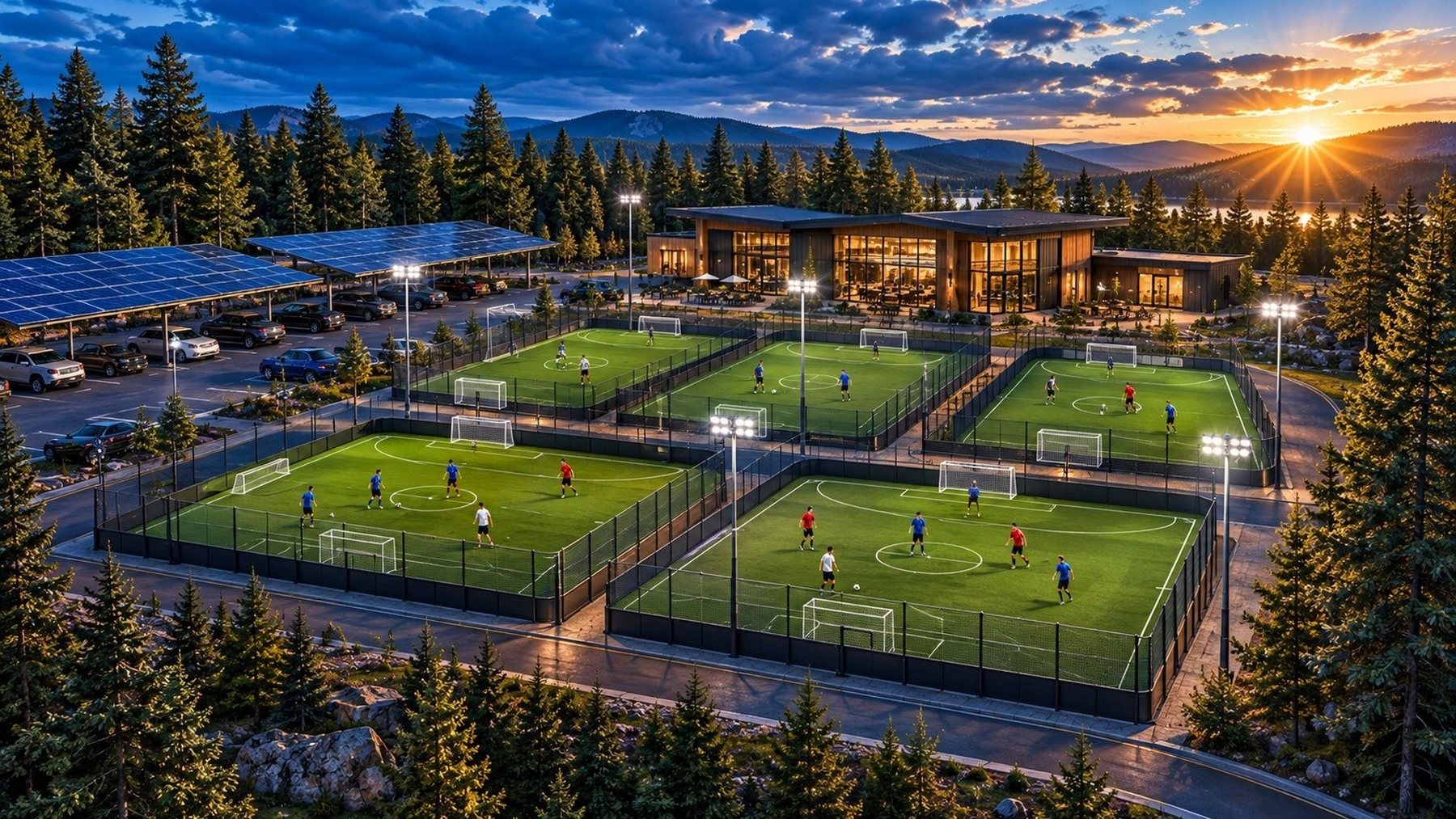
Small-sided soccer is any version of the game with fewer than eleven players on each team. The most common formats run from 3v3 to 7v7, on compact turf fields that are often fenced so the ball stays in play. Turf Teams plans a standard field of 60 by 100 feet. Games are short, teams are easy to organize and every player is involved.

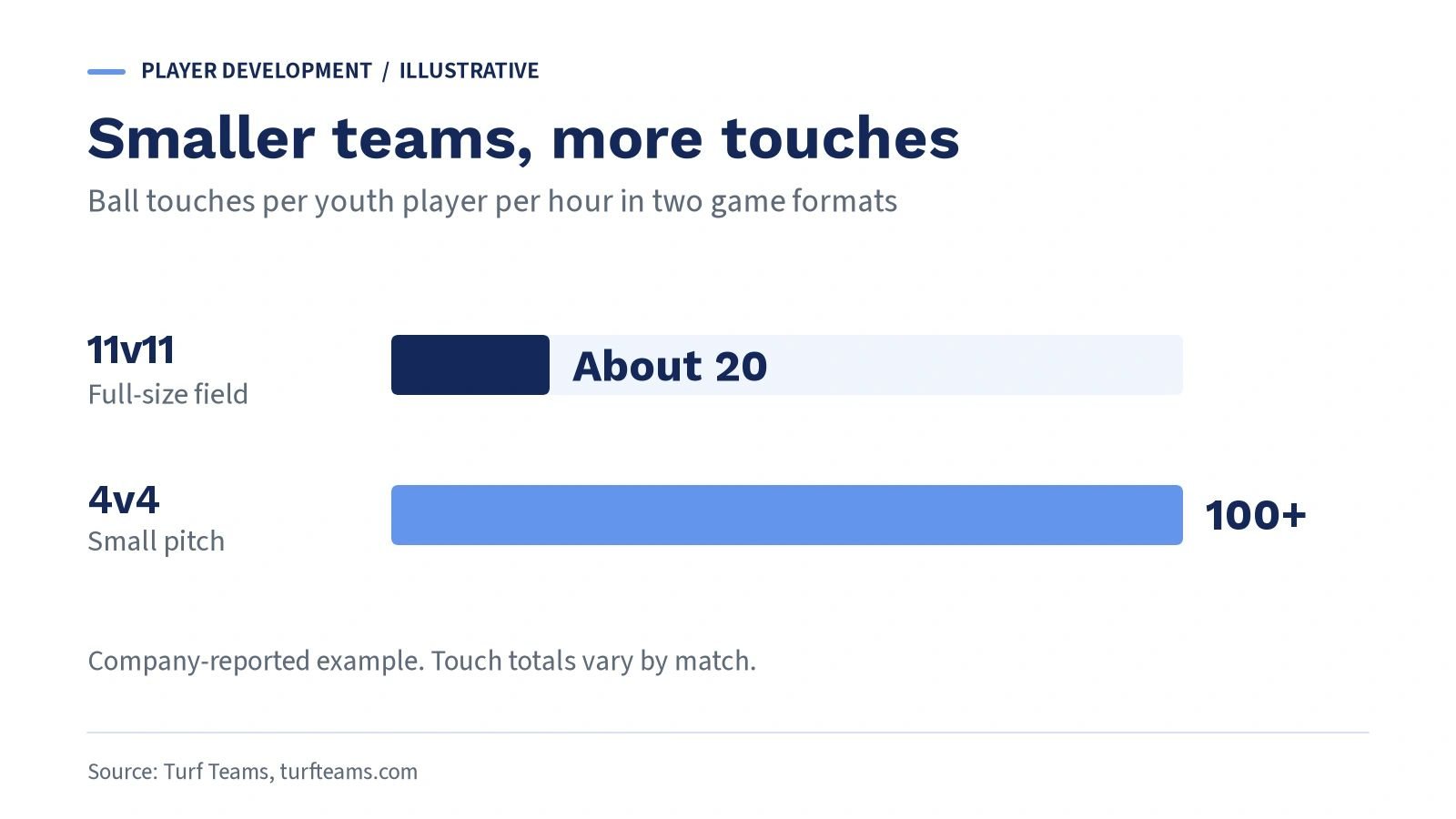
The format is also how players learn. Turf Teams notes that a young player touches the ball about 20 times an hour in a full 11v11 match, and more than 100 times in a 4v4 game on a small field. A coaching presentation hosted by US Youth Soccer cites a study of under-10 boys that recorded 22 touches in 60 minutes of 11v11 play, compared with 205 touches in 48 minutes of 4v4.
The governing body agrees. Since August 2017, U.S. Soccer has required its member organizations to adopt small-sided standards. Its maximum game formats are 4v4 at under-7 and under-8, 7v7 at under-9 and under-10, and 9v9 at under-11 and under-12. In my view, the rules now call for small-sided games, but the fields have not kept up.
Source: Turf Teams
How the rest of the world plays small-sided soccer
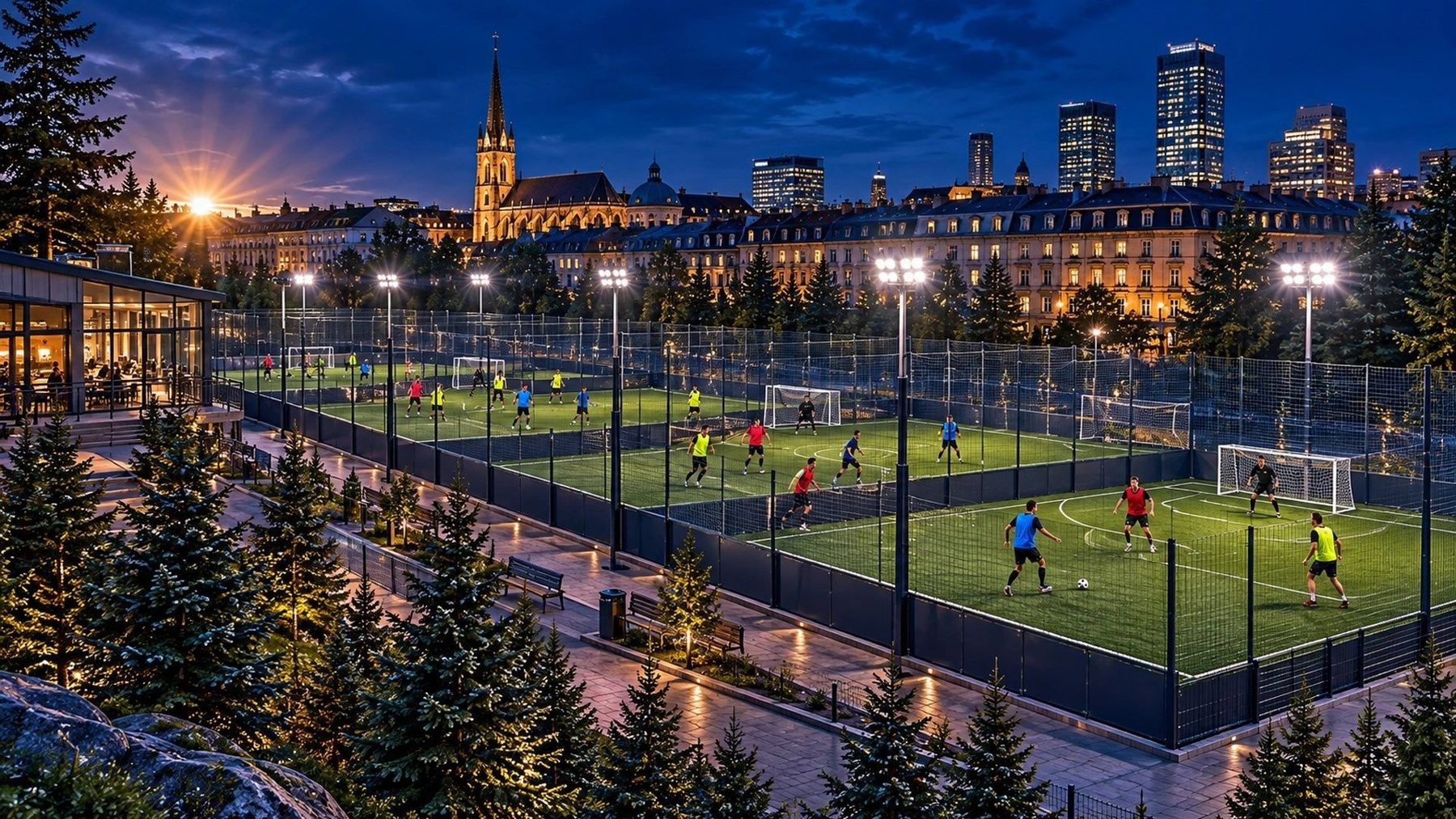
Five-a-side soccer began in the West of Scotland in the 1970s, when tennis courts were converted into small pitches, according to an industry white paper from FRANdata. It spread across the United Kingdom and Europe, and for many players it became the everyday form of the game.
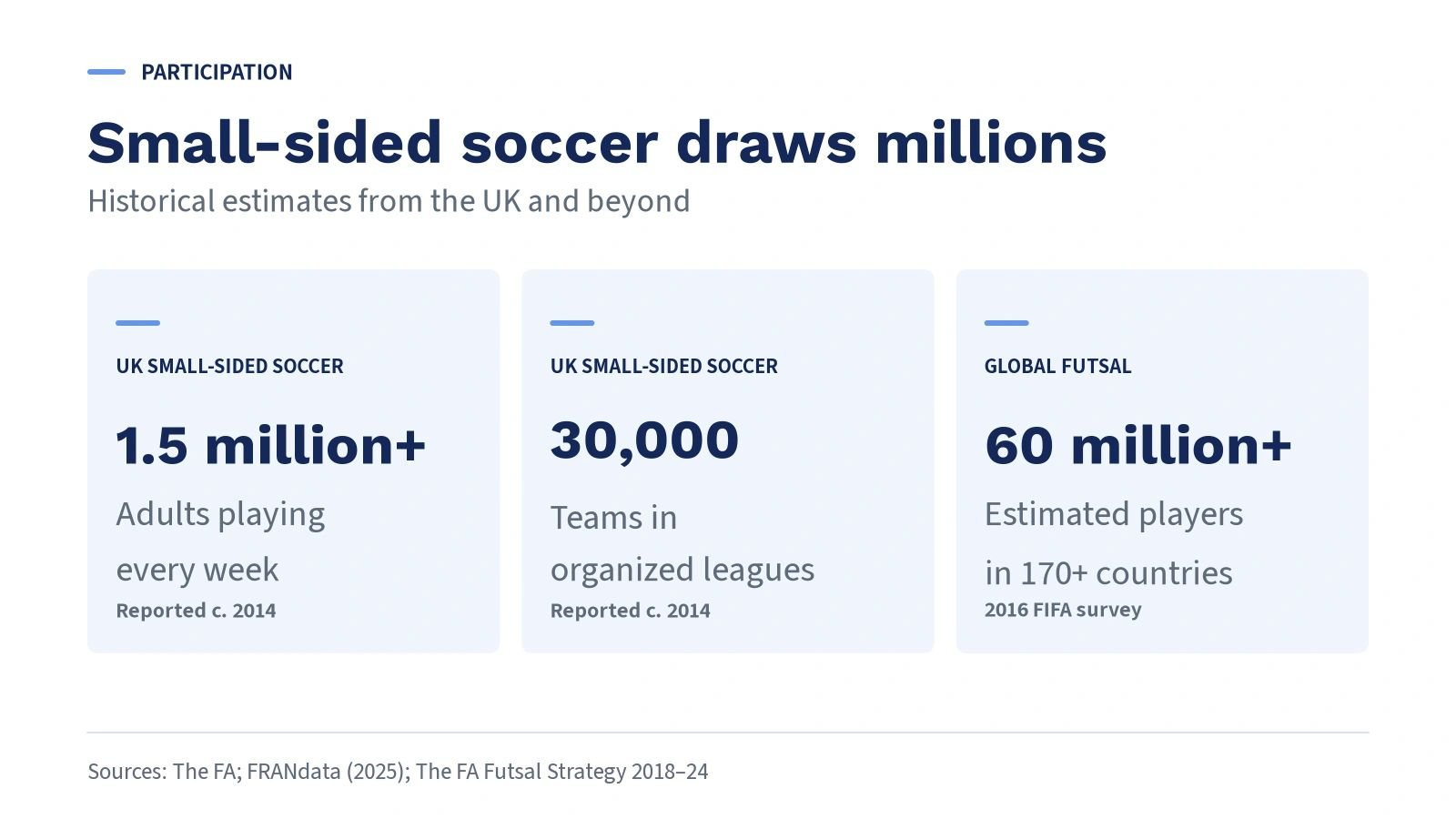
England. Sport England told Parliament in 2018 that weekly adult play in the 11-a-side game fell nearly 20% between 2010 and 2016, to 561,000, while outdoor small-sided play grew 5%, to 785,300. Research commissioned by Sport England, The FA and the Premier League estimated the wider small-sided market at 13.2 million adults.
Worldwide. Futsal, the indoor five-a-side game, is played in more than 170 countries by an estimated 60 million people, according to The FA, citing a 2016 FIFA survey.
Germany. The German football association made 2v2, 3v3 and 5v5 formats binding nationwide for its youngest age groups from the 2024/25 season.
Iceland. With a population of about 329,000, Iceland built 154 mini-pitches, expanded to 13 indoor pitches and licensed around 700 coaches, UEFA reported in 2016. That summer its national team beat England and reached the last eight of the European Championship.
Sources: FRANdata, 2025; Hampshire FA; The FA Futsal Strategy 2018-24
The Gap in the United States
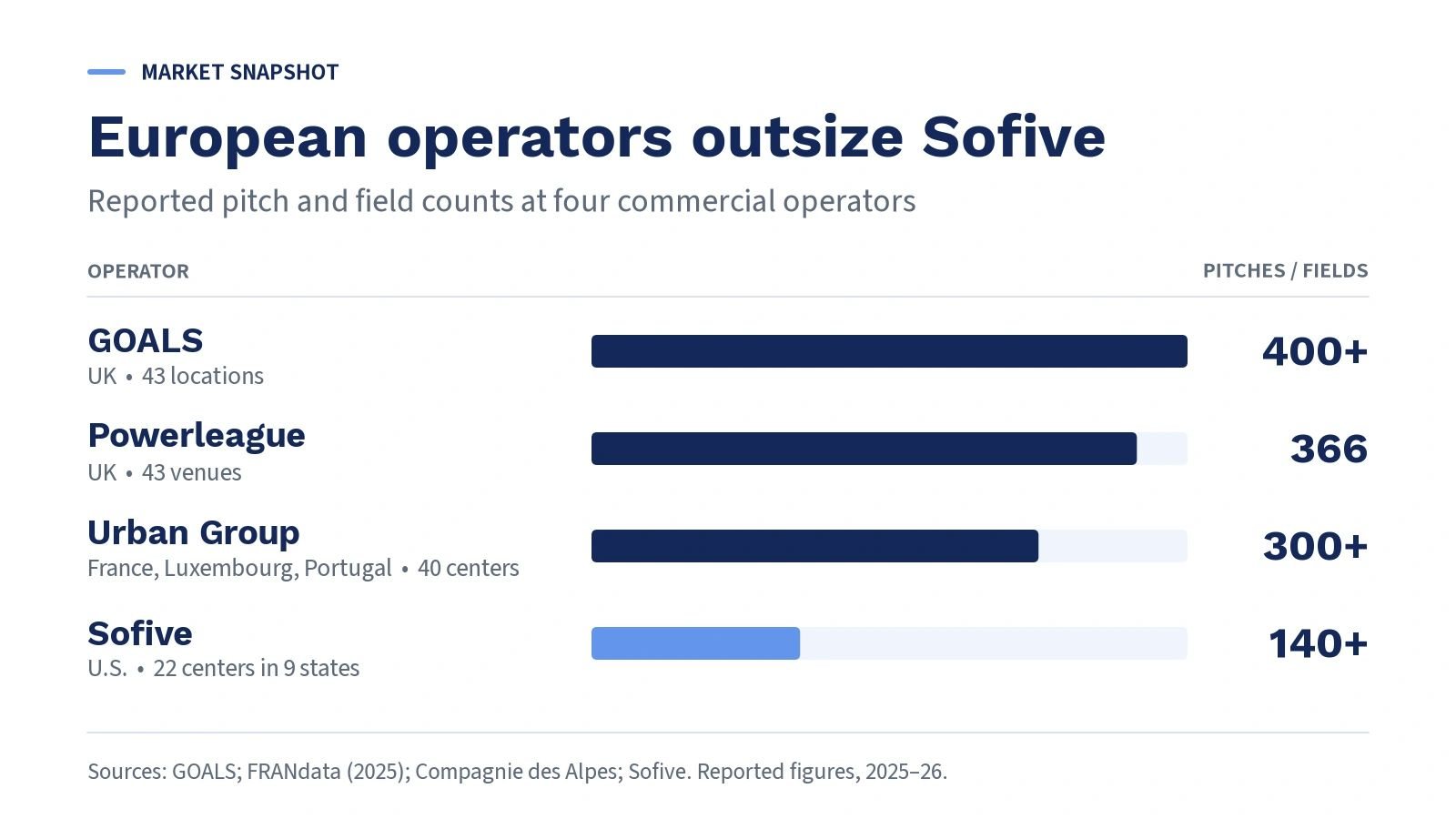
The United Kingdom is a far smaller country than the United States. Yet two British operators run more than 760 small-sided pitches between them. GOALS reports more than 400 pitches at 43 locations, and FRANdata counts 366 Powerleague pitches at 43 venues. In France, Luxembourg and Portugal, Urban Group operates 40 centers with more than 300 five-a-side pitches.
The American market looks very different. Sofive, one of the largest U.S. operators and backed by City Football Group, the parent company of Manchester City, reports 22 centers and more than 140 fields. FRANdata describes the U.S. market as relatively untapped, with only a handful of companies offering small-sided field rentals.
In my experience, school and municipal fields are often full-size and booked for existing programs. That can make it hard to find a small, lit field for a weeknight adult game or a youth practice. Turf Teams is designed to serve those players.
Sources: GOALS; FRANdata, 2025; Compagnie des Alpes; Sofive
How the Turf Teams Business Works
The two sides are designed to support each other. The real estate side holds the site and what is built on it. The operating side fills the fields with players.
The Real Estate Investment
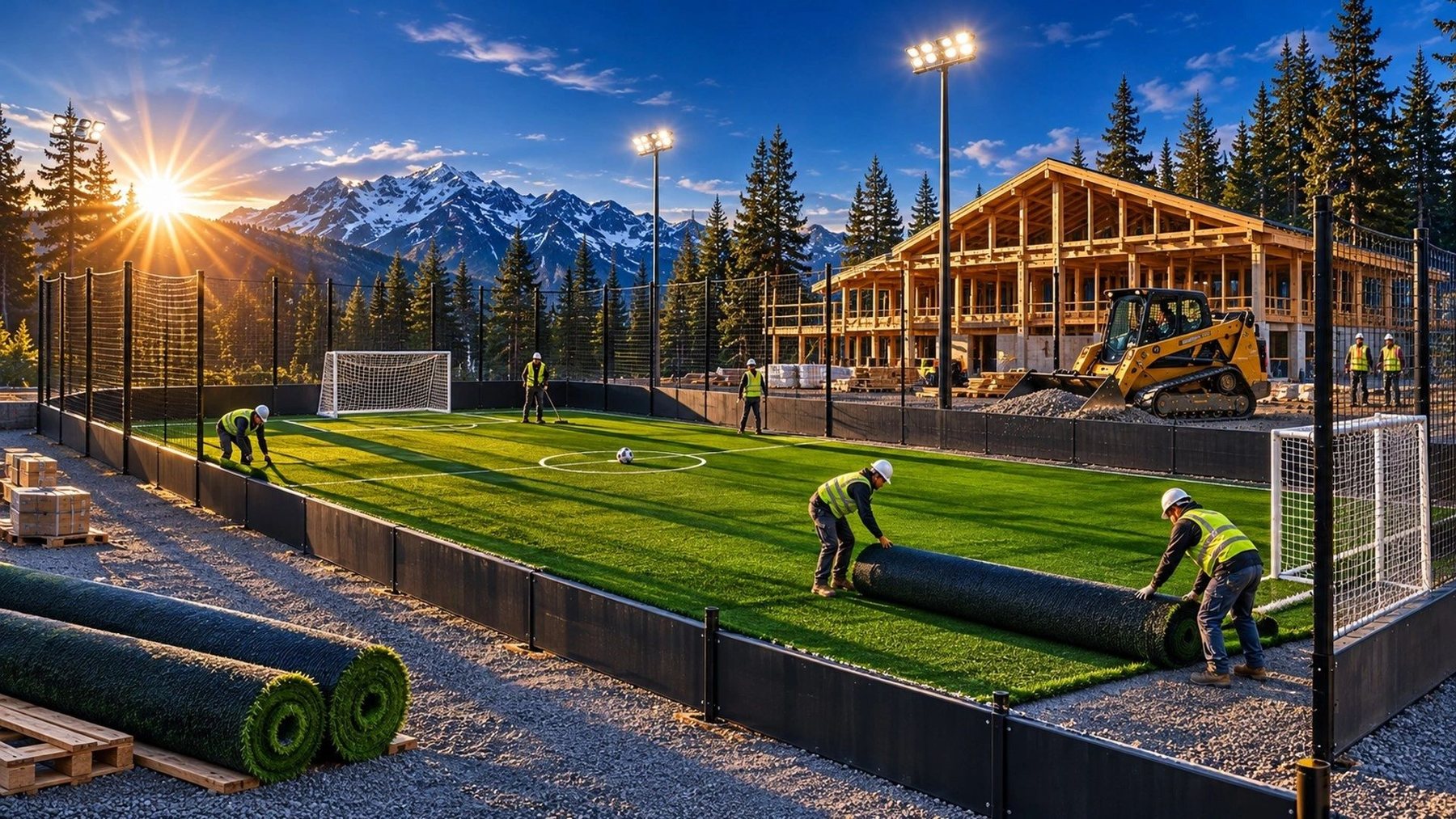
A small-sided complex is special-purpose real estate. The investment covers the site and what is built on it: turf fields, fencing, lighting, parking and a clubhouse. Its value depends in large part on how often the fields are booked.
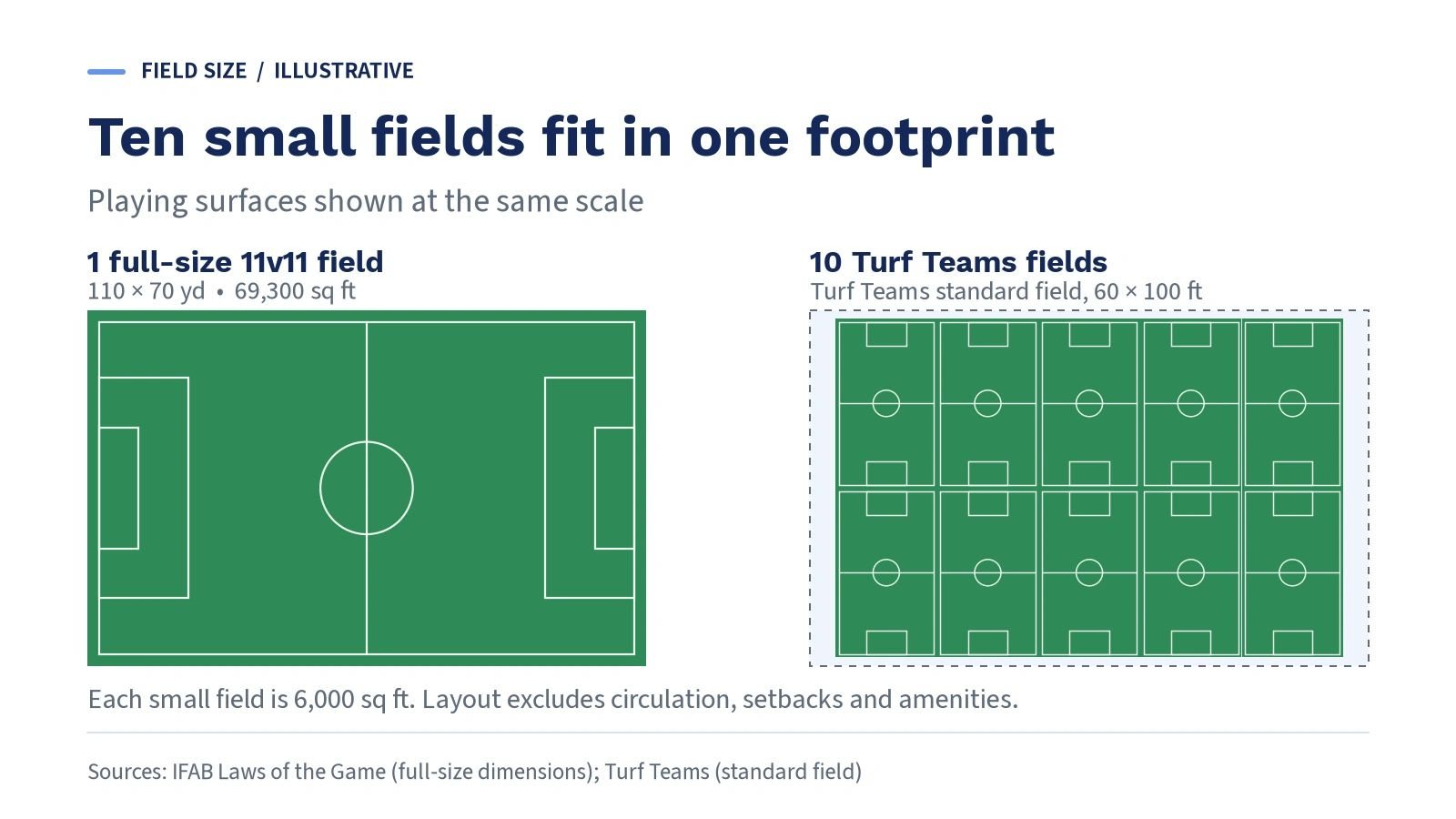
Small fields use land efficiently. Ten 60-by-100-foot fields fit inside the outline of one full-size field measuring 110 by 70 yards.
An industry example from FRANdata shows why that matters. It compares a 5,000-square-foot field rented at $120 an hour with an 81,000-square-foot full-size field rented at $62.50 an hour. At those rates, the small field brings in about 31 times as much rental revenue per square foot for each booked hour. The comparison does not account for how often either field is booked or what it costs to build and run. It is not a Turf Teams result or forecast.
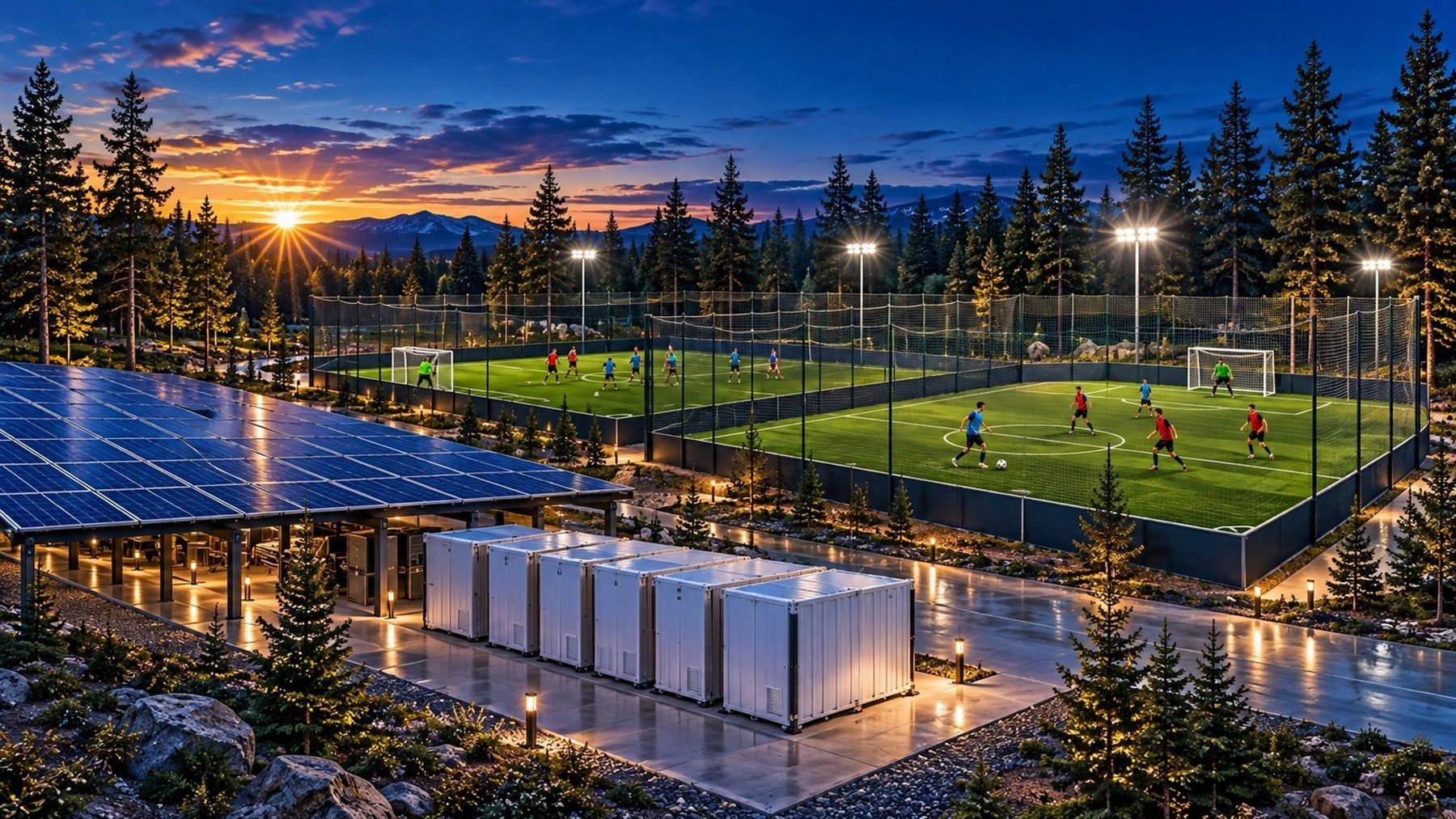
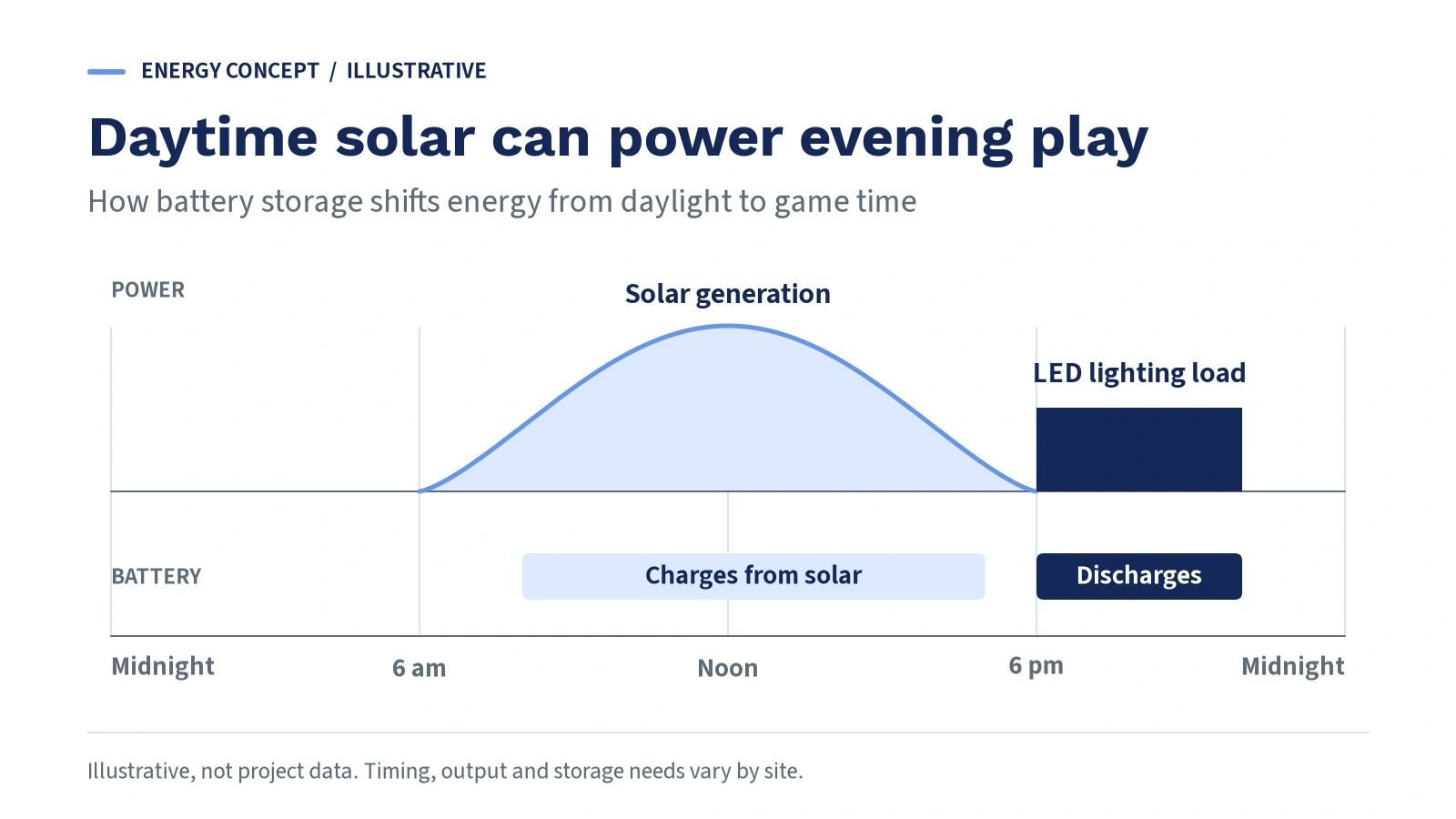
Lights let people play after school and after work, when demand is highest. Lighting is also a major energy cost. Where a site can support it, Turf Teams plans to power LED field lights with solar panels and battery storage. The panels generate power during the day, and the batteries store it for evening games.
Public studies show why those pieces fit together. A 2021 lighting report for the Town of Wellesley, Massachusetts estimated that replacing 20-year-old metal-halide lights at one field and its tennis courts with LEDs would cut energy use by around 55%. In a modeling study of commercial buildings, the National Renewable Energy Laboratory found that solar paired with batteries cut peak billing demand by a median of 42%, compared with 8% for solar alone. Neither study predicts Turf Teams' energy use or costs.
Field improvements and energy equipment may also qualify for depreciation and clean-energy tax benefits. Those depend on each site and on current law, and investors should consult their own advisors.
The League and Field Rental Business
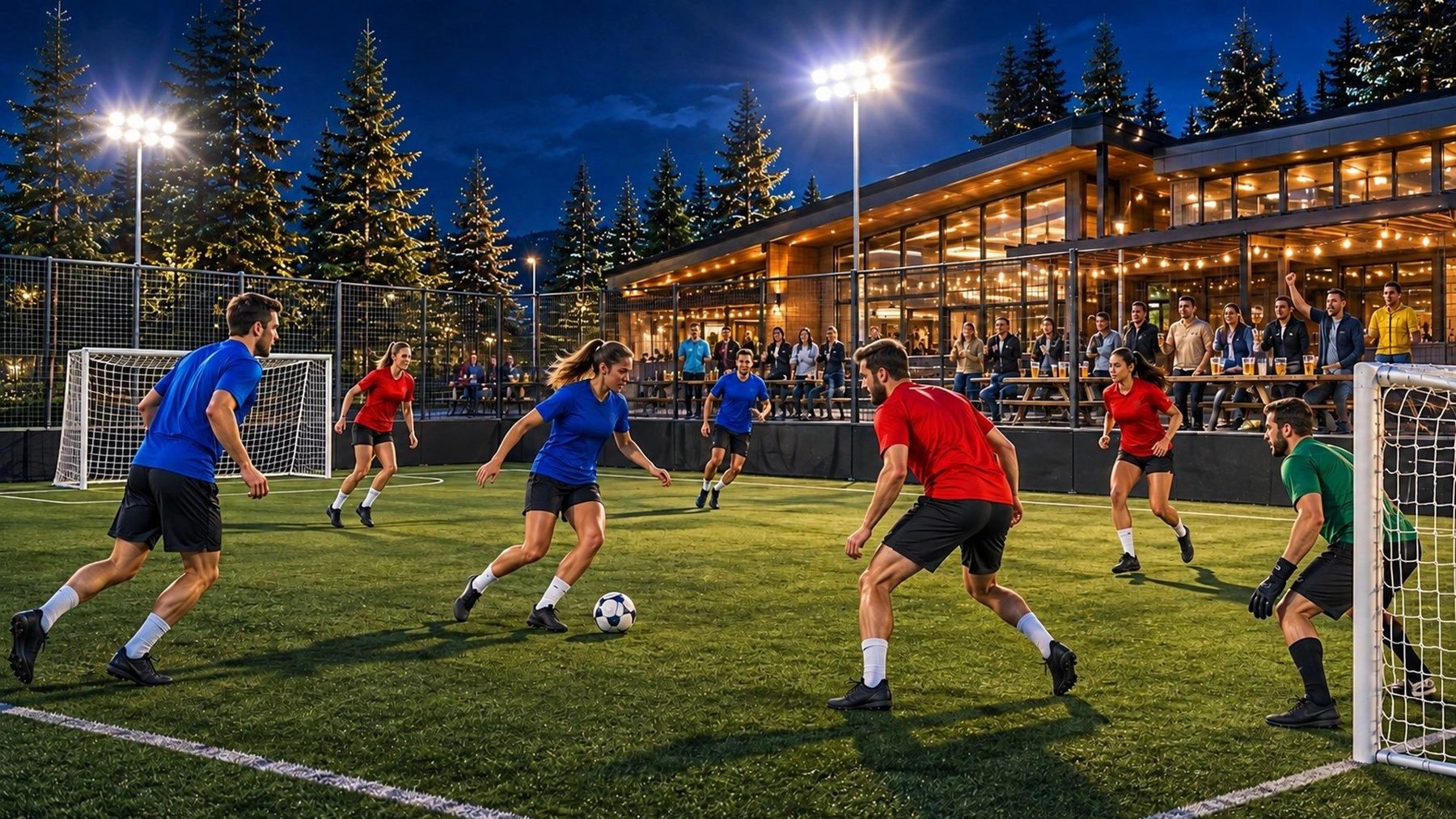
The operating business is planned to be local and simple. Turf Teams intends to rent fields by the hour to teams, leagues, trainers and camps. It also plans to run its own youth and adult leagues, so that weeknights and weekends fill with regular play.
The model has a track record in the United Kingdom, setbacks included. Northwind 5s bought the assets of Goals Soccer Centres out of administration in 2019. For 2021 it reported revenue of £27.2 million and pre-tax profit of almost £6.4 million, reversing a £4.3 million loss the year before, according to The Times. Players come back every week because the game is quick, social and easy to organize: book a field, bring nine friends and play for an hour.
Each side is meant to strengthen the other. Leagues give the real estate steady, recurring use. Well-built, well-lit fields give the leagues a reason to stay.
Where Turf Teams Goes from Here
We owned a professional club and have looked hard at buying another. The opportunity I see in American soccer today is closer to home than a stadium. It is the small field down the street: land put to productive use, lit with LEDs and solar power where the site allows, and booked by players who come back every week.
To learn more about Turf Teams, visit www.turfteams.com. To reach HP Auto Fund, visit our Connect page.